 |
| |
 |
| Issue #27: The tech privacy PR war |
| Plus: Google's new phone, Alexa's new tricks, and the case for shared reading lists |
| |
 |
|
Google and Facebook would very much like you to know that they care about privacy.
On stage at Google’s I/O conference last week, CEO Sundar Pichai insisted that privacy should not be a luxury—an obvious snipe at Apple and the privacy messaging around its high-end products—then reiterated that point in a New York Times op-ed. Facebook CEO Mark Zuckerberg went even further a couple weeks ago, declaring at the company’s own industry conference that "the future is private."
Neither gesture was totally empty. Google, for instance, now lets you automatically delete old searches and other activity data tied to your account after a certain period of time, sparing you from the manual deletion steps I mentioned in Issue #25. You can set this up by heading to Google’s web and activity page while signed into your account, then hitting the "Choose to delete automatically" button. The company’s also working on an "Incognito Mode" for Google Maps (as an alternative to turning off location tracking altogether), new anti-tracking tools in Chrome, and easier ways to cut off location data from third-party apps in the next version of Android.
As for Facebook, the company is redesigning its apps and website to focus more on sharing with smaller groups, rather than your entire friends list or the public. The Groups tab is dead-center in a new version of Facebook’s mobile app that’s rolling out now (I'm not seeing it on my end yet), and will be more prominent on the desktop site when it’s overhauled later this year. Meanwhile, Facebook Messenger is getting end-to-end encryption, which will prevent Facebook, government agents, or anyone else besides the actual recipient from seeing the content of your messages, and it’s adding a dedicated app section for talking with close friends and family.
All of these initiatives are better than nothing. But they also represent a sort of bare-minimum effort, aimed at steering our perceptions of privacy in directions that serve Google's and Facebook's respective interests.
In Google’s case, we might ask ourselves why the new auto-deletion tool only offers cutoffs of 18 months and three months for wiping old activity data, rather than, say, one month or 24 hours. This is anecdotal, but I’ve deleted old Google data within a one-month window before, and I can’t say it’s degraded my experience with Google products in any noticeable way. Still, that activity data might be much more valuable to advertisers in that first month, which would explain why Google isn't moving its cutoff windows up any further.
Facebook’s privacy pivot also defies credulity, partly because of the company’s many past missteps, and partly because of how it narrowly defines privacy as a concept. As The Outline’s Casey Johnston points out, encrypting Messenger conversations or emphasizing private group communication doesn’t prevent Facebook from collecting, monetizing, and possibly mismanaging troves of personal data on its users. And unlike Google, Facebook offers no tools for deleting your activity—likes, reactions, searches, and so on—on a regular basis. (In fact, the only way to delete old likes is to pick through them one by one.)
For good measure, we can also poke holes in Apple’s privacy publicity: While the company has been saying that privacy is "a fundamental human right," iMessage remains exclusive to iOS, which means iPhone users don’t benefit from encryption when texting with Android users. With iPhone prices now exceeding $1000, Apple's creating a high barrier of entry for folks who want private texting by default. Apple's Siri assistant also does a better job of keeping users' voice searches anonymous compared to Amazon Alexa and Google Assistant, but the only way to get Siri on a smart speaker is with Apple’s $300 HomePod. That's six times the price of an Amazon Echo Dot or Google Home Mini. Google may have a point about the high price of privacy as Apple envisions it.
I don’t want to be too cynical about all of this. My point is that each tech giant has its own incentives for shifting the privacy conversation in one direction or another. Apple’s absolutist position only works because of the company’s premium pricing, while Google and Facebook have to strike a trickier balance between privacy and the ad targeting that supports their free services.
Instead of taking these companies' privacy messaging at face value, we should be skeptical of their motives, and be aware of areas where they can all do better. And if they can't (or won't) improve on their own, we’ll just have to keep finding more ways to take matters into our own hands.
|
|
| Tip of the moment |
 |
|
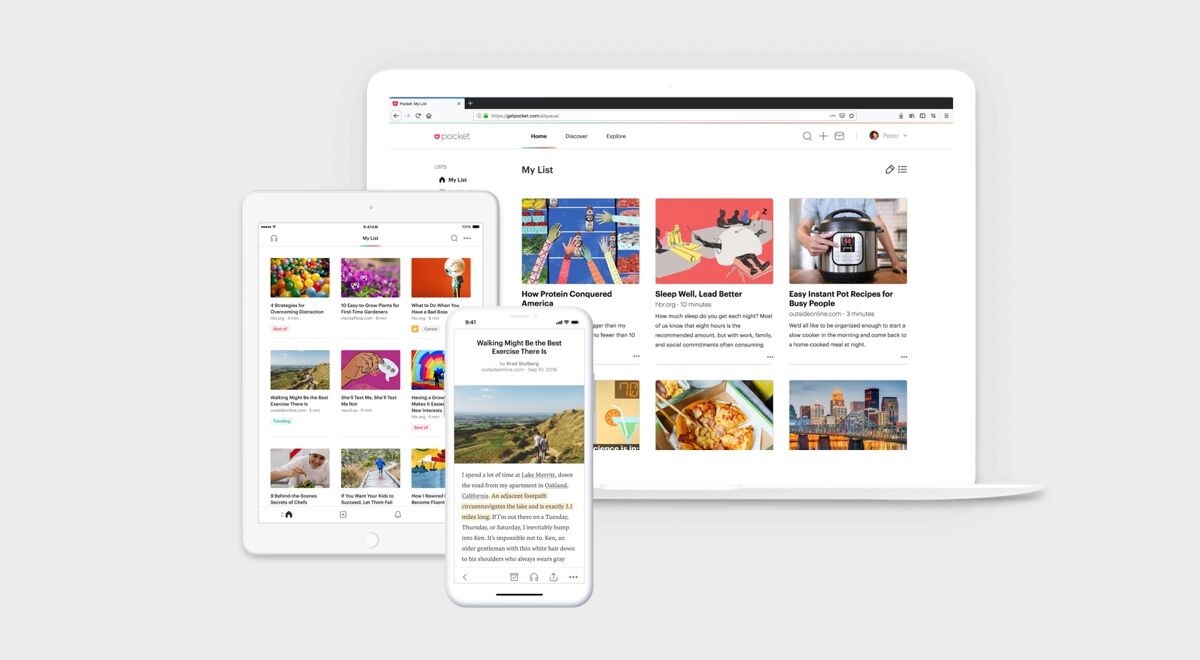
For years, I’ve used the free app Pocket to save lengthy stories that I want to read later. Unlike regular bookmarks, Pocket reformats articles into a reader-friendly view, with no ads or other clutter, then syncs the reading list across all your devices for offline reading. It even supports text-to-speech narration.
But until reading this story by GQ’s Chris Gayomali, I’d never considered setting up a unified reading list for my wife and I. Sharing a reading list with someone close to you, he writes, can be "a side door into one another's curiosities, with none of the performance calculus—‘you might like this!’—entering the equation.”
Chris actually uses Instapaper instead of Pocket, but either one should work, so long as both users are signed into the same app with the same account. The bigger challenge, I suspect, is to have each person commit to saving (and actually reading) stories on a regular basis. My own Pocket queue is long enough already.
|
|
| Need to know |
|
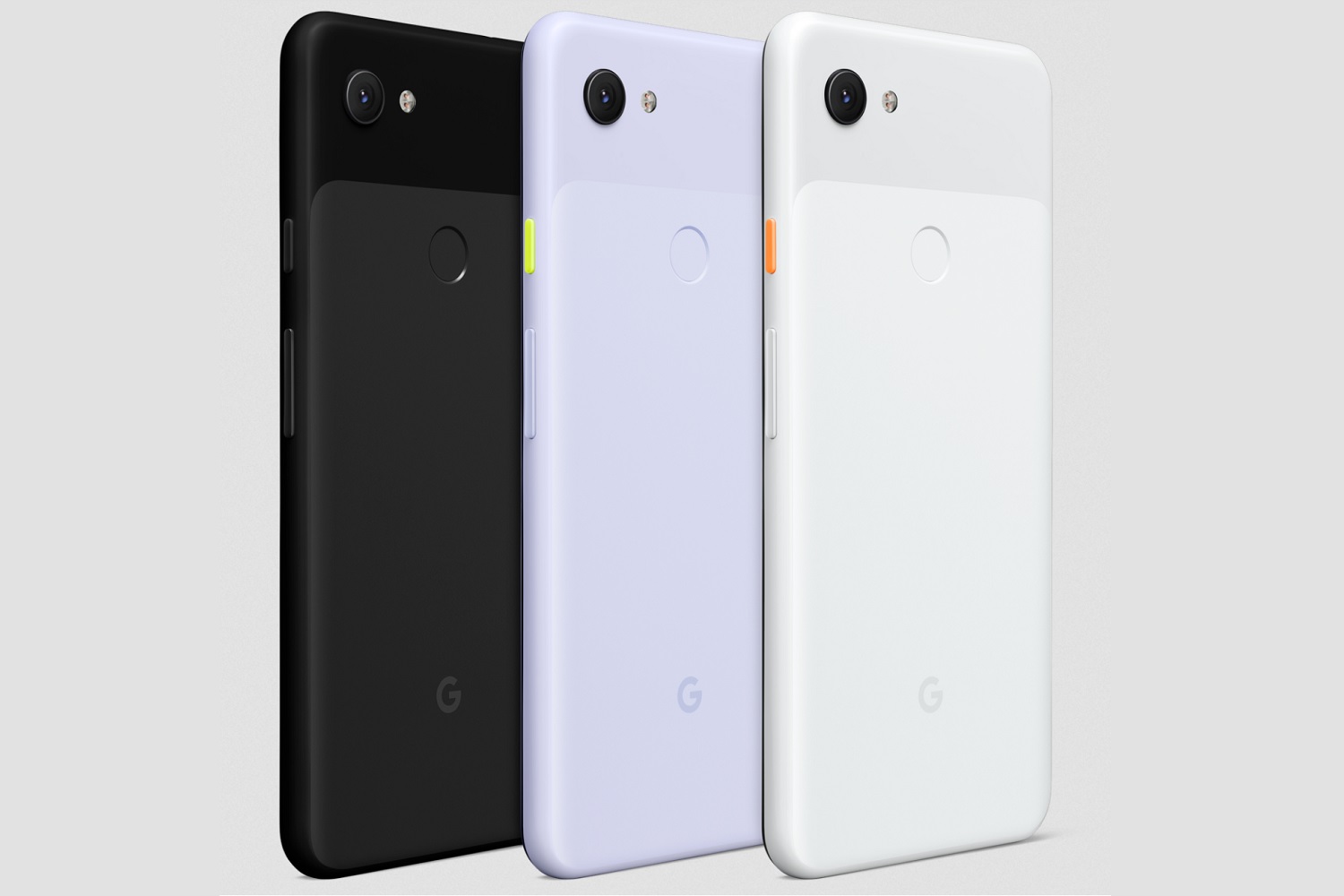
A cheaper Google Pixel: After admitting that its Pixel 3 phones haven’t been strong sellers, Google’s trying again with much cheaper versions. The new Pixel 3a and Pixel 3a XL cost $399 and $479 respectively, which is about half the price of their higher-end counterparts, yet they have the same stellar rear cameras and similar OLED screens.
They also run the same software, so you can squeeze the sides of the phone to bring up Google Assistant (a feature I love), have Google ask who’s calling (you’ll see a transcript of the response), and take excellent low-light photos. After living with Samsung’s Note9 for a couple months, I’ve really missed those features and Google’s cleaner, simpler approach to Android overall.
Of course, there are trade-offs: Compared to the regular Pixel 3, the Pixels 3a have less-powerful processors and plastic enclosures instead of glass, and they lack a secondary front camera for wide-angle selfies. They also don’t offer wireless charging or water resistance, and they don’t include unlimited full-resolution backups to Google Photos. (Like any other phone, you can back up unlimited photos at slightly reduced resolutions instead.) Unlike the Pixel 3, however, the Pixels 3a do have headphone jacks.
I’ll be trying out the Pixel 3a first-hand soon. In the meantime, check out Dieter Bohn’s review over at The Verge for a deep dive.
No more 'Works with Nest': The other big news out of Google's I/O conference last week is that it's killing off the "Works with Nest" program, which allowed Nest's thermostat, security cameras, and smoke detector to communicate with smart home devices made by other companies. While Google is carving out an exception for Alexa, so you'll be able to control Nest devices with Amazon's voice assistant, other integrations will break on August 31. (A list of notable examples is here.)
This just underscores the danger of setting up an extensive smart home system around any particular platform right now. There are too many moving parts, too many competing ecosystems, and not enough guarantees that what you build today will work tomorrow. Setting up specific use cases like smart lighting or security monitoring still makes sense, but trying to build an ultra-futuristic home where every appliance talks to one another remains perilous as ever.
Just say stop: One more Google-related tidbit: Next time you’re trying to silence an alarm on a Google Home or another Google Assistant device, you can now just say "Stop" instead of "Hey Google, stop.” This comes as a relief to me, given how many times Google Assistant has failed to recognize the latter phrase over the sound of a blaring alarm on my Lenovo Smart Display. File this under ideas that Amazon should immediately copy for Alexa.
Alexa’s new alarm routines: Over on Amazon's side of the smart home fence, Alexa can now execute a chain of events whenever you dismiss an alarm. If you're using an Echo speaker to wake you up in the morning, for instance, you can have Alexa announce the weather, read the news, turn on some smart light bulbs, or play some music.
To set this up, open the Alexa app on your phone, then select "Routines" from the left-hand menu. Hit the "+" button and select "When this happens," then select "Alarm." You can then add whatever events you want in the "Add action" menu. For the morning alarm example, you may also want to press "Change" next to "Anytime" to limit the routine to the A.M. hours. That way you won't start hearing the news or a traffic report after your late-day snooze.
|
|
|
| |
|
| Spend wisely |
 |
|
If you're eying Google's new Pixel 3a phones, the Google Store is throwing in a $100 credit with your purchase. It's also offering trade-in credit for iPhones, including up to $250 in credit for the nearly five-year-old iPhone 6. B&H is offering a $100 store gift card with the Pixel 3a as well, and Best Buy is taking $100 off with activation.
Got a newer phone that supports wireless charging? Anker's PowerWave charging pad is down to $12 on Amazon when you apply a $4 coupon at checkout. That's the lowest price I've seen for a wireless charger from a reputable brand. It doesn't include an A/C adapter, but it does come with a 3-foot Micro-USB cable. (Here's a list of phones that support wireless charging.)
|
|
| Advisorator turns one! |
|
It’s hard for me to believe, but Advisorator’s first birthday is tomorrow, May 14. I lost a lot of sleep around this time last year, wondering if there was an audience for a subscription-based tech advice newsletter, but thanks to all your support, Advisorator is going strong and steadily growing. I love putting this newsletter together for you, and I’m excited to build upon a solid foundation in year two.
If you haven’t filled out the reader survey yet, please do. I’ll pick one respondent at random to receive a $50 Amazon gift card, one week from today. As of now, your odds of winning are not too bad!
This week’s live chat session (which, per the survey, many of you value even if you haven’t participated) will be on Friday, May 17, at 1 p.m. Eastern. Click here to get a reminder email before it starts, or just drop in here when the time arrives. I’m always happy to take your tech questions over email as well.
One more bit of housekeeping: With Memorial Day two weeks from today, the next newsletter will go out on Tuesday, May 28.
Thanks again for your support!
Until next time,
Jared
|
|
|
|
|
|
|
|
|
|