 |
| |
 |
| Issue #44: The coming year in tech |
| Plus: Simpler Amazon shopping, Windows 7's end, and relief from browser notification nags |
| |
 |
|
While the previous issue of Advisorator was all about looking back at 2019, now it's time to peek ahead at what the coming year will bring. At least that was my goal last week, as I darted around Las Vegas covering the annual tech spectacle known as CES.
My conclusion? 2020 will feel somewhat like a rebuilding year, as tech companies continue to flesh out all the buzzy ideas they started touting at last year's show.
Take foldable phones as an example. At CES, I got to play Huawei's Mate X, which shipped in China late last year. I'll be honest: It's glorious, with a screen-release button that causes the phone's wraparound display to unfurl into tablet mode. (Here's a video I took.) But it's also roughly twice the price of an iPhone 11 Pro at around $2,400 and will probably never sell stateside. Meanwhile, Samsung's Galaxy Fold had a disastrous launch here last year, and Motorola's forthcoming foldable Razr throwback seems like an expensive novelty, with an unfolded screen no larger than today's standard phones. Even as a fan of the concept, I don't expect to be using foldables in the real world until at least 2021, when phone makers might get access to bendable glass instead of scratch-prone plastic.
Some laptop makers are also getting into the foldable business, but with the same early-stage problems. For instance, I checked out a 13.3-inch tablet from Lenovo (pictured above) that folds into a tiny laptop, with a magnetic keyboard you can clip onto the screen's bottom half. It's a neat idea, but the hardware is chunky and it'll cost a cool $2,500. Meanwhile, the version of Windows that's optimized for these devices isn't coming until later this year, so again we're looking at tech that won't feel real until 2021 at the soonest.
5G wireless is a little further along, but the implementation is messy. T-Mobile has a version of 5G that covers about 60% of the U.S. population but is only about 20% faster than 4G. Verizon and AT&T have much faster "millimeter wave" versions of 5G, but coverage is extremely spotty even in the small number of cities where it's available. (AT&T is also working on the slower version of 5G, similar to what T-Mobile offers.) Sprint is trying to strike a middle ground with "mid-band" 5G, but also doesn't have much availability yet.
Meanwhile, 5G modems aren't yet built into the microchips that most smartphones use, so phone makers are mostly relegating 5G to special handsets that are pricier than their mainstream products. Case in point: Two of the more interesting phones at CES were cheaper "Lite" versions of Samsung's existing Galaxy S10 and Galaxy Note 10. Neither support 5G. Let's revisit the topic when Apple releases new iPhones in the fall, supposedly with 5G as a standard feature.
As for 8K TVs, these you can actually buy today, and you'll see more of them this year from the likes of Samsung, LG, and TCL. But while the technology is ready, 8K content isn't, which means you'll have to rely on the TV's upscaling to make 1080p or 4K content look sharper than it actually is.
I suspect 8K will play out much the same way that 4K did: It'll become a standard feature on high-end televisions because it's an easy-to-understand marketing bullet point, even though other features like higher peak brightness, more local dimming zones, or better image processors are doing the real heavy lifting. 8K will also probably push people toward ever-larger screens. In the meantime, though, it's telling that Vizio isn't including 8K on any of its 2020 sets; the company tends to focus on value, and it knows 8K is still too expensive for practically everyone.
Having said all of that, what should you actually look forward to in the months ahead? Some thoughts:
Regular laptops are starting to come standard with Intel's 10th-generation Core processors, which allow for better performance and battery life in slicker designs. The highlight for me at CES was the 2020 version of Dell's XPS 13, which cuts out the bottom border underneath the display so that the laptop is practically all screen. LG is making similar optimizations for the next version of its Gram 17, a surprisingly light 17-inch laptop that I reviewed (and thoroughly enjoyed) for PCWorld last year, and Acer is stretching the screen of its ultralight next Swift 3 laptop to a 3:2 aspect ratio, which is taller than usual for a Windows machine.
There's also plenty to be excited about in the world of non-8K TVs. Vizio is getting into the OLED TV business, which will put some price pressure on OLED sets from LG and Sony, and TCL is moving its Mini-LED tech down from its top-shelf 8-Series TVs to its cheaper 6-Series sets. All of this will add up to deeper blacks and more vibrant colors at lower prices. Also, the prevalence of HDMI 2.1 in this year's TVs will allow for variable refresh rates and lower latency (among other things), both of which are a big deal for gaming.
Even if you're not an early adopter, 2020 is the year in which you can start taking Wi-Fi 6 seriously. The new wireless standard supports faster top speeds (if you're paying for fast enough internet service), but more importantly, it's better at dealing with congestion and can improve your devices' battery life. While some routers launched with Wi-Fi 6 support last year, they'll be ubiquitous in 2020. And with Wi-Fi 6 support built into the latest iPhones, Samsung's latest flagship phones, and Intel's 10th-gen laptop processors, the devices you buy this year will be able to keep up.
One other mini-trend to watch for: More cheap versions of flagship phones. In addition to the Galaxy S10 and Note 10 Lite that I saw at CES, we're already hearing rumors about Google's Pixel 4A and Apple's iPhone SE2, both of which will likely deliver high-end phone features at lower prices.
Of course, CES is about more than just big, sweeping trends. Part of the reason I enjoy going to the show is to find the clever little innovations that might otherwise slip under the radar, and to get up close with the wilder ideas that I know full-well might never ship. You can read more about those findings in this feature of mine over at Fast Company.
|
|
| Tip of the moment |
 |
|
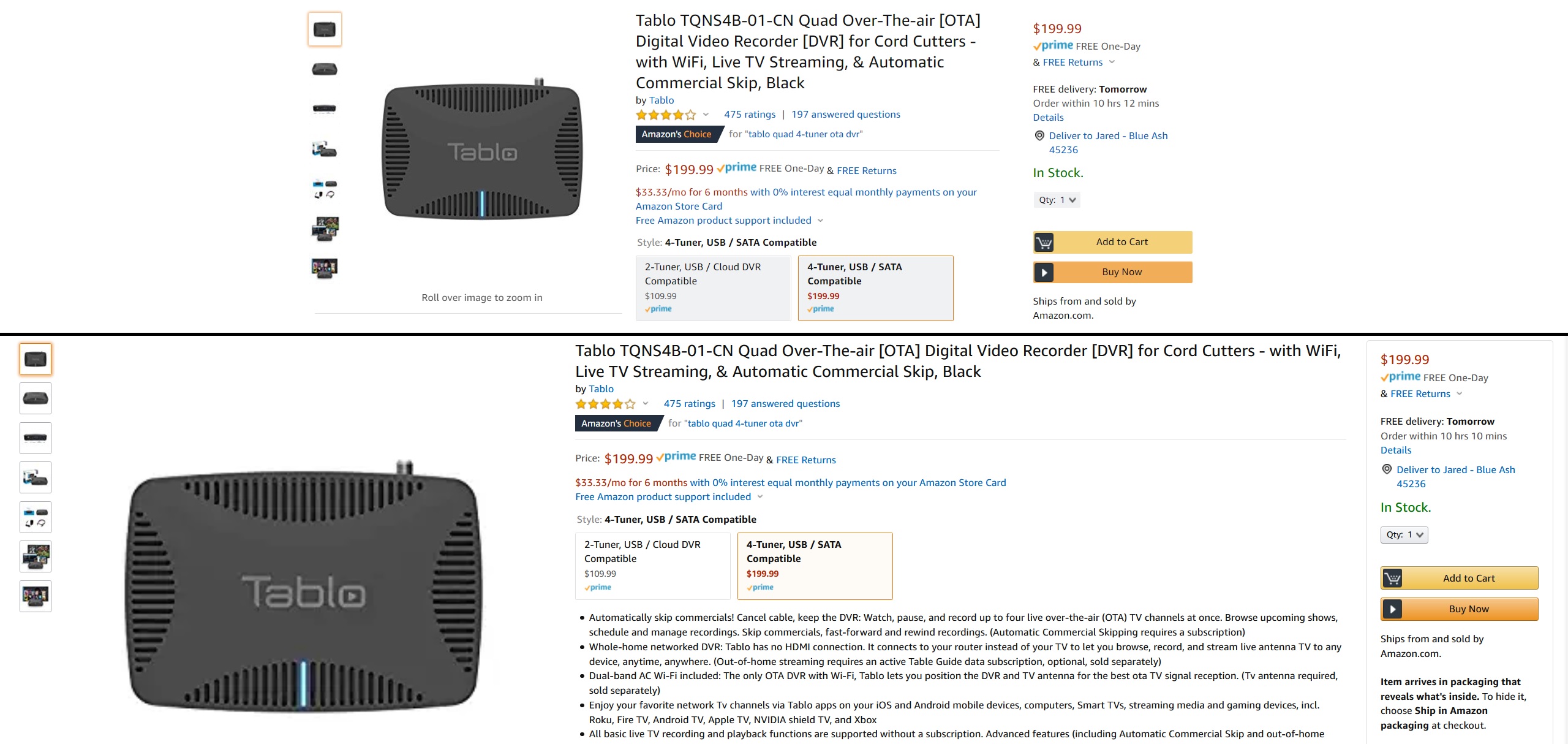
While reading Gizmodo's recent list of Amazon shopping tips, I came across a neat Chrome extension called Amazon Lite that makes the shopping site much less of an eyesore. The layout is narrower, with more white spacealong the edges of the screen so your eyes don't have to scan back and forth as much, and there are no sponsored listings, videos, or banner ads cluttering up the product pages. Even the "Add to Cart" and "Buy Now" buttons have flat colors instead of shading to give them a more modern look. (The image above shows the Lite version on top and standard version underneath.)
Tech companies are famous for constant A/B testing, in which they experiment with little interface tweaks to try and squeeze better results out of their users, so I have to assume Amazon's unwieldy website is good for business. But if you seldom benefit from all that cruft and would appreciate a cleaner design, Amazon Lite is a relief.
|
|
| Need to know |
|
The end of Windows 7: As of today, Microsoft is cutting off mainstream support for Windows 7. Unless you're a business or education customer, and are willing to pay for further updates, your system will be exposed to any security vulnerabilities that emerge from here on out.
In other words, it's time to upgrade to Windows 10, whether you like it or not. (On balance, I'm a fan, mostly because I'm a sucker for modern design.) The good news is that you can probably finagle a free upgrade to Windows 10 if your computer is capable of running it. Longtime Windows watcher Ed Bott has a handy guide over at ZDNet, and he's done a fine job answering questions on the end of Windows 7 for the Houston Chronicle.
The case against Kohl's for Amazon returns: Seeing as I have a Kohl's less than a half-mile from my house, I'm a fan of the recent Amazon.com feature that lets you return products to Kohl's stores instead of bringing them to UPS or an Amazon shipping store. You don't even have to pack the product up for shipping; the item's original packaging will suffice.
But over at Input, Ray Wong came away with the opposite impression. Wong lives in New York City, where Kohl's locations are in short supply, yet Amazon is now requiring customers to bring their returns to the stores unless they want to pay for shipping. He's found a workaround, albeit a dishonest one: Instead of selecting "no longer needed" or "better price available" as the reason for return, choosing "inaccurate website description" somehow waives the UPS shipping price.
Wyze's security breach: I've previously recommended Wyze Labs' $25 security camera as a capable alternative to much pricier options, so I was disappointed to hear over the holidays about a security breach affecting 2.4 million Wyze customers. The breach didn't expose video footage or passwords, but did include customer email addresses, profile pictures, Wi-Fi network details, and device names.
Wyze, to its credit, has fully owned up to its mistake with details on what went wrong and all the new processes it's now establishing to shore up security in the future. But it's too bad Wyze (and its customers) had to learn the hard way that these measures should have been in place from the start.
SIM swapping's still a threat: Speaking of security issues, one of the scariest forms of cyberattacks today is a practice called SIM-swapping, in which an attacker convinces your wireless phone provider to send them a new SIM card attached to your phone number. The attacker can then receive phone calls and text messages on your behalf, potentially allowing them to reset your passwords or hijack your two-factor authentication messages. The goal is usually to gain access to online banking, email, or other sensitive accounts.
Anyway, a new study by Princeton University underscores why SIM swapping is still a threat: Wireless customer support reps can be too lax about stopping impersonators, ignoring failed verification tests and in some cases only requiring the requester to read off the numbers of recent phone calls to get a new SIM card. Researchers also identified 17 websites that let users reset their passwords via text message with no other verification needed. There are ways to protect against SIM swapping on your own--most notably, setting up an account PIN with your wireless carrier and using an authenticator app instead of text messages for two-factor authentication--but the Princeton study shows how carriers and websites can do more on their end.
Ring's security upgrades: Okay, one more security story. After a series of highly-publicized breaches and well-documented deficiencies, Ring says it will add a feature called "Control Center" to its mobile apps later this month. From this section, users can see a list of devices logged into their accounts, revoke access for any of those devices, and opt out of footage requests from law enforcement. The section will also eventually include shortcuts to more privacy settings, and Ring says it will soon make two-factor authentication the default setting for new accounts and devices.
One might argue that Ring isn't going far enough, but it's a step in the right direction for a company that just a month ago was blaming users for its security issues.
|
|
|
| |
|
| Spend wisely |
 |
|
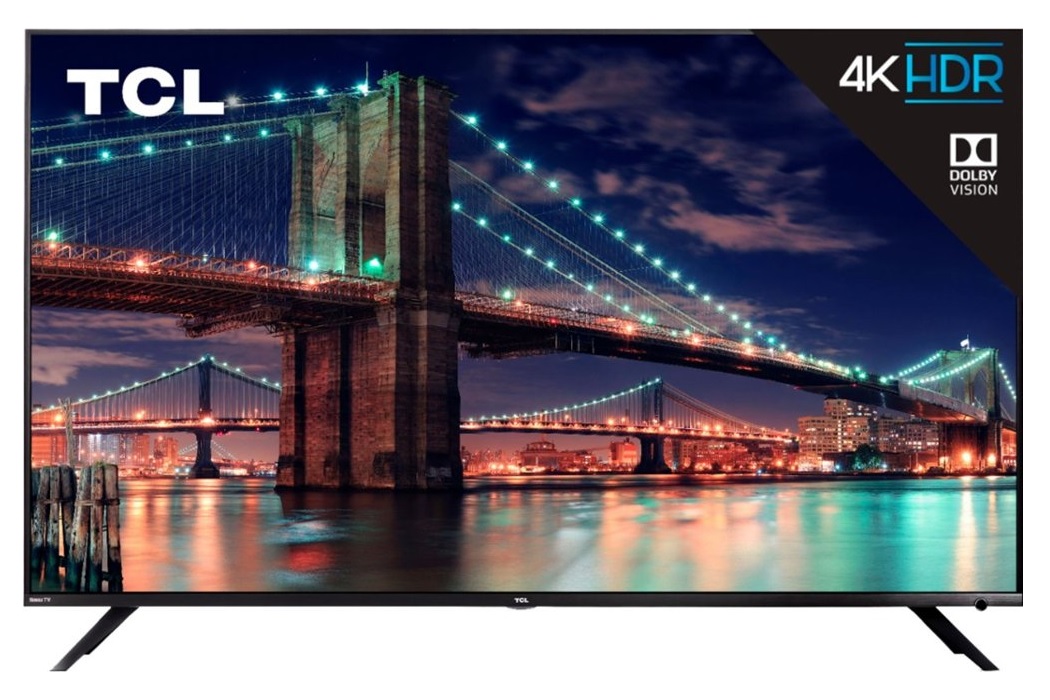
Of course, the announcement of new TVs at CES means we're going to see some increasingly good deals on last year's sets. As the folks at SlickDeals point out, some Best Buy stores are now selling TCL's 65-inch 6 Series Roku TV (with Dolby Vision HDR) for just $425, compared to Black Friday pricing of around $600. The catch is that you'll have to inquire with your local store and find out if they're selling the set for $500. If so, you can use this bar code to take an extra 15% off.
As for more easily-obtainable deals, Apple's second-gen AirPods are down to $129 from Amazon, and the new 16-inch MacBook Pro is $250 off.
|
|
| Parting advice |
|
Here's one more reason (among many) to consider using Firefox as your web browser: It now automatically hides the annoying pop-ups you get when a website wants to send you notifications. You can still enable a site's notifications if you want--the option now appears as a little speech bubble icon in the address bar--but the request no longer gets in the way of your web browsing.
If you're dedicated to using Chrome, worry not: Google will add a similar feature to its browser in the next major release on February 4. You can also just disable notifications right now by heading to this settings page and disabling the "Ask before sending" toggle.
|
|
| Thanks for your support! |
|
Happy New Year, dearest Advisorator subscribers! Thanks for sticking with me during this three-week gap between newsletters. As a reminder, I will be sending out an extra issue next week to make up for the lost time.
I'm ready to resume our live chat room sessions as well, so you can get your tech questions answered in real-time. Drop into the chat room here on Friday at 2 p.m. Eastern time, or click here to get on the reminder list. You'll receive an email from me shortly before the session begins. Otherwise, just send me your questions via email and I'll answer them as quickly as I can.
Until next week,
Jared
|
|
|
|
|
|
|
|
|
|