What to use for digital notes and how to do a better job taking them.
The post Take better notes appeared first on Advisorator.
What to use for digital notes and how to do a better job taking them.
The post Take better notes appeared first on Advisorator.
You deserve the speed you’re paying for—and OpenSpeedTest will help make sure you’re actually getting it in a way most standard speed tests can’t manage.
If you suspect something’s amiss with your home network, the first thing you might do is run a speed test from sites like speedtest.net or fast.com—or even the newer Orb speed test tool featured here last May.
– https://www.fastcompany.com/91606189/slow-wi-fi-open-speed-test?partner=rss&utm_source=rss&utm_medium=feed&utm_campaign=rss+fastcompany&utm_content=rss
Photos might be HomeView’s killer app. Too bad for those of us who don’t store them with Apple.
As someone who’s kept a smart display on the kitchen counter for the last eight years, I should be among the target audience for Apple HomeView.
– https://www.fastcompany.com/91625533/apples-homeview-has-a-google-problem?partner=rss&utm_source=rss&utm_medium=feed&utm_campaign=rss+fastcompany&utm_content=rss
As the future of software becomes and endless stream of unvetted AI slop, you’ll have to become more discerning about which tools you use.
The post The AI software slop invasion appeared first on Advisorator.
Apple’s automation app is easier than ever now that AI can build them for you.
Thanks to Siri AI and Shortcuts in iOS 27, I’ve finally created a better version of Shazam.
– https://www.fastcompany.com/91621141/start-vibe-coding-your-own-iphone-shortcuts-already?partner=rss&utm_source=rss&utm_medium=feed&utm_campaign=rss+fastcompany&utm_content=rss
The dream of the open web as the next great computing platform is finally over.
Does Google still believe in the open web? With the launch of its new Googlebooks, it doesn’t feel that way.
– https://www.fastcompany.com/91615554/googlebooks-mark-the-end-of-the-old-google?partner=rss&utm_source=rss&utm_medium=feed&utm_campaign=rss+fastcompany&utm_content=rss
What to use instead of Word, Photoshop, and more.
The post Free alternatives to expensive apps appeared first on Advisorator.
Shoes that put on themselves, glasses that help you hear, a hassle-free smart microwave, and more.
Consumer technology is at its best when it’s solving problems that exist outside of the tech world. This year’s honorees include better ways to clean your floors, put on your shoes, hear the conversation around you, and practice music effectively. There’s also a less-intrusive smart lock, a refreshingly simple microwave oven, and—if you’ll allow one solution to a problem caused by technology itself—a way to spare your smartphone screen from prying eyes.
– https://www.fastcompany.com/91609906/consumer-next-big-things-in-tech-2026?partner=rss&utm_source=rss&utm_medium=feed&utm_campaign=rss+fastcompany&utm_content=rss
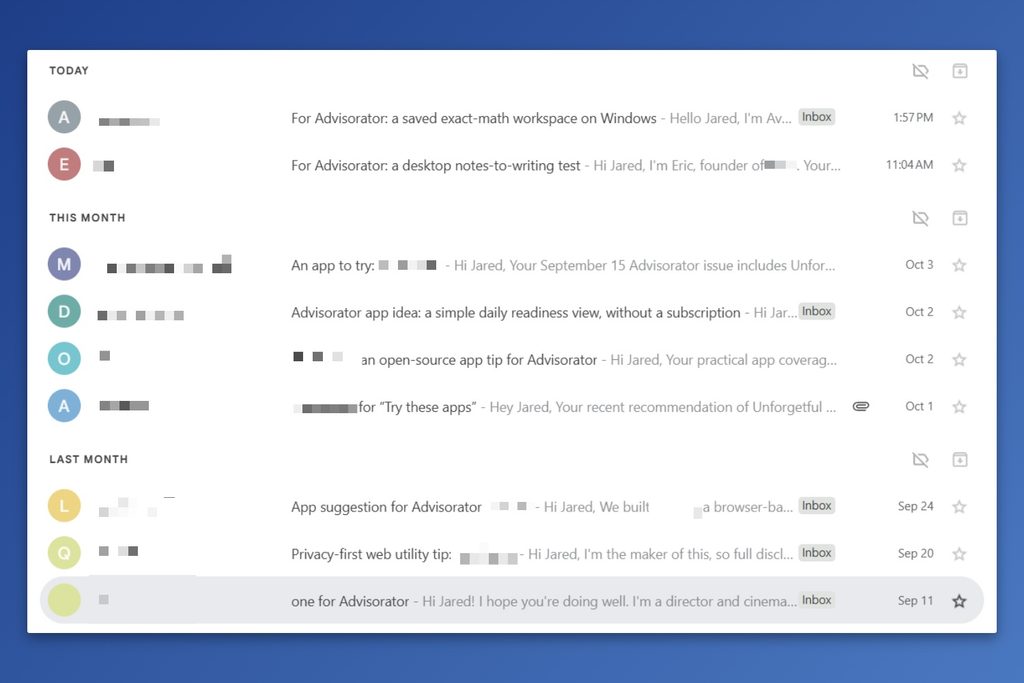
Over the past few months, I’ve noticed a surge in emails that all follow the same pattern.
An app developer introduces themselves, then praises (or at least references) my newsletter or freelance work. They then encourage me to try their app, which is usually some utility like a voice note-taker, a calculator, or a text converter with some freemium business model attached.
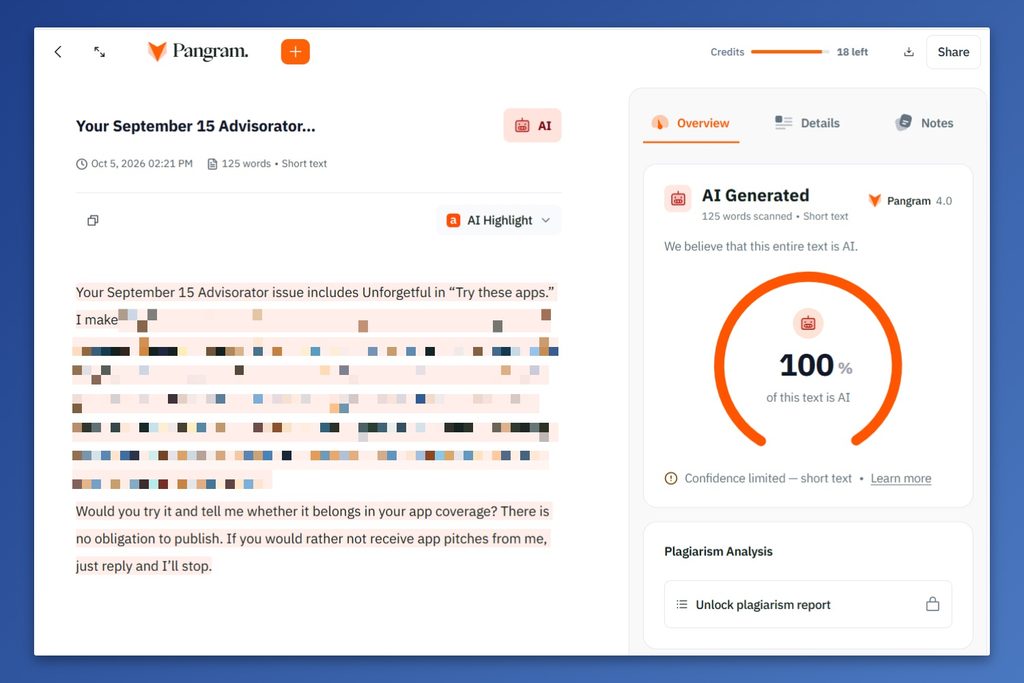
The apps are obviously vibe-coded in Claude or whatever, or at least they seem that way, with clashing fonts, over-explained interfaces, and slapdash design. The pitches themselves are also AI; running them through Pangram confirms that the text is entirely AI-generated.
Even if the apps are real, the whole thing feels unseemly, as if I’ve found myself in the midst of some new AI hustle: Use Claude Code to churn out low-effort utility apps, round up a list of journalists who write about useful tech tools, and have AI generate personalized email pitches based on their public work.
I’m not saying all vibe-coded software is inherently bad. I’ve put together a few such projects myself as a way to scratch a personal itch or fulfill what seems like an unmet need. But there’s no passion on display here. What I’m seeing in these pitches is nothing more than a raw numbers game.
So if you (or your AI agent) are reading this and thinking about pitching me on your app, I have a few requests first:
A couple years ago, I would have felt pretty guilty about deleting a pitch from an indie developer. My inbox is already awash in human-written PR slop, so the creators who take the time to send a personal message would always get my attention. It’s too bad that some opportunistic individuals are now using AI to abuse this privilege.
Here’s what happened when I used AI to wipe my personal info from the internet.
The post A wild new way to protect your personal info appeared first on Advisorator.
Siri is good now, but it also takes getting used to.
The post Big changes for Siri appeared first on Advisorator.
This simple software organizes your online life—and it works with almost any browser, too.
Whenever I install a new web browser, one of the first things I do is replace the new tab page.
– https://www.fastcompany.com/91593352/chrome-new-tab-bookmarks?partner=rss&utm_source=rss&utm_medium=feed&utm_campaign=rss+fastcompany&utm_content=rss
While the big carriers love to yell about getting a new iPhone “on us,” they tend to bury important details in the fine print.
The post What a free iPhone will cost you appeared first on Advisorator.
Apple’s first foldable iPhone brings a bigger screen and some clever tricks, but living with one still means making a few compromises.
As someone who’s enjoyed foldable phones for several years now, I’m glad Apple’s gotten around to making one.
– https://www.fastcompany.com/91603659/considering-an-iphone-duo-heres-what-having-a-foldable-phone-is-really-like?partner=rss&utm_source=rss&utm_medium=feed&utm_campaign=rss+fastcompany&utm_content=rss